The predictive maintenance market is no longer a pilot curiosity. It has become one of the fastest-growing corners of industrial technology, and 2026 is the year the numbers stopped being debatable. According to The Business Research Company, the market grew from $11.82 billion in 2025 to $15.29 billion in 2026 — a 29.4% jump in a single year — and is forecast to reach **$41.87 billion by 2030** at a 28.6% CAGR. Other analysts size it even larger: Fortune Business Insights puts 2026 at $17.11 billion and projects $97.37 billion by 2034. Either way, the direction is the same. Condition-based maintenance has moved from optional to expected, and the buyers are no longer just the largest plants.
Why it is growing this fast
Three forces are stacking on top of each other:
- Downtime is brutally expensive. Unplanned stoppages cost industrial manufacturers on the order of $50 billion a year. A single failed bearing that takes out a gearbox can idle a line for a shift.
- Sensors got cheap. MEMS accelerometers that once cost serious money now ship in volume at a fraction of their 2020 price, which means the sensor itself is no longer the budget line that blocks a program.
- Edge and AI did the heavy lifting. Local FFT and lightweight models turn a raw vibration trace into a fault alert without a data-science team on staff.
None of these is new, but together they pushed predictive maintenance past the pilot phase into procurement.
Vibration monitoring is the engine
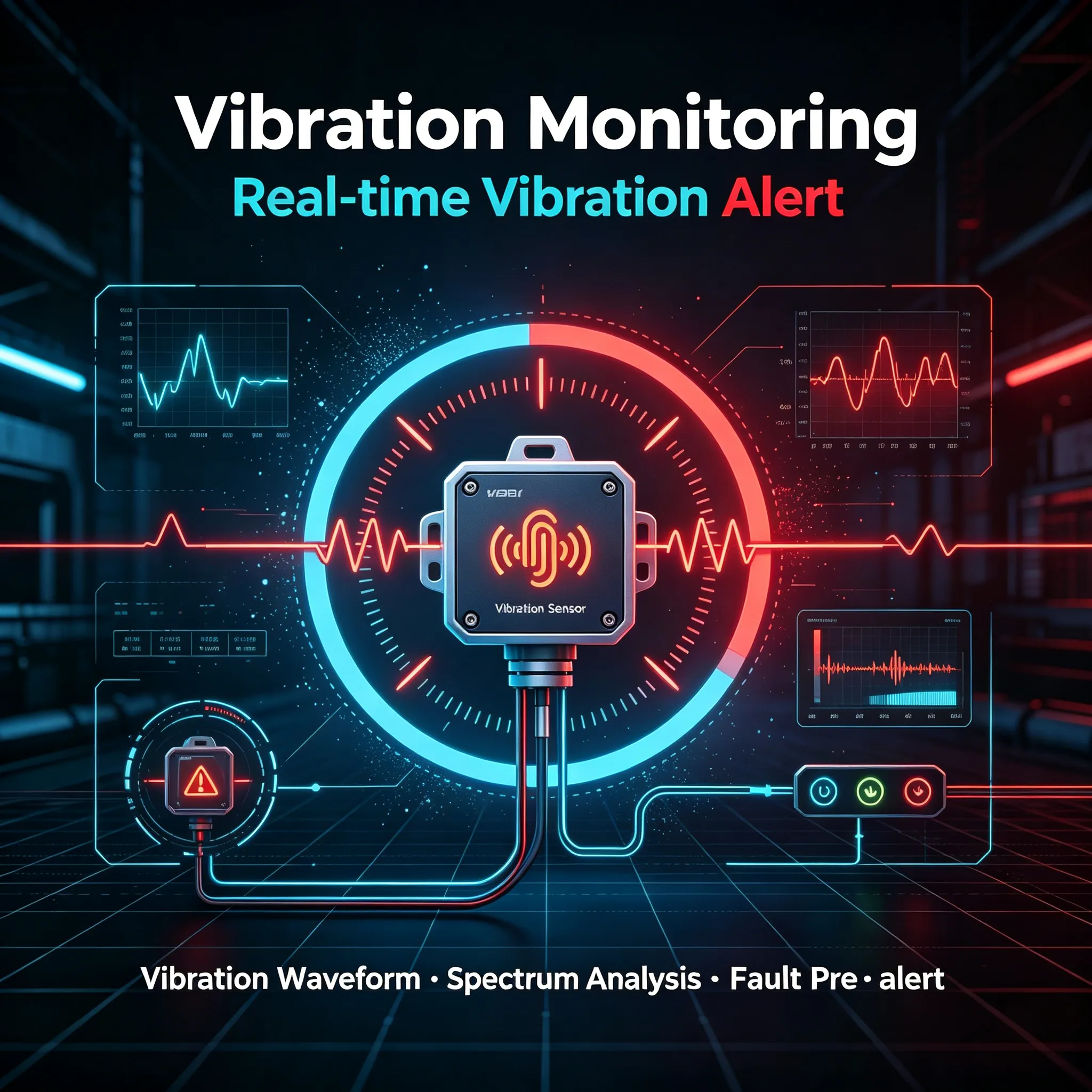
Within predictive maintenance, condition monitoring — led by vibration — was the largest application segment in 2024. That is not a coincidence. Rotating machines fail in ways that vibration reveals weeks before anything breaks: a bearing’s outer-race frequency shows up as a new peak in the spectrum long before a human ear catches it. A ±8g accelerometer mounted on a motor catches that wear early, which is exactly why most predictive-maintenance rollouts start with vibration and expand from there.
This is also where the industrial accelerometers we build fit. A three-axis unit captures the full motion vector from one mounting point, so one sensor covers the axes a fault might arrive on instead of forcing you to guess.
What the numbers mean for buyers
The business case is now well documented:
- Maintenance cost drops by up to 40% versus reactive maintenance, and 8–12% versus preventive.
- Unplanned downtime falls by as much as 50%.
- Machine life extends by roughly 20% because failures are caught and scheduled, not suffered.
For small and mid-sized plants, the tipping point is the combination of cheaper sensors and SaaS-based analytics. You no longer need a sprawling OT network to start; five or six critical assets proof the value, then the program widens.
For high-g impact work — drop tests, crash and forging qualification — a ±16g accelerometer covers the shock and transient events that a general-purpose range would clip, which is why impact testing sits in its own band rather than being forced onto a low-g sensor.
Where the growth is concentrated
North America held the largest share in 2025 (about a third of the market), but Asia-Pacific is the fastest-growing region as manufacturing digitization accelerates. By end-use, manufacturing, energy and utilities dominate, with healthcare and logistics climbing. The through-line is the same everywhere: asset-intensive operations where a stopped machine is straight lost revenue.
How we fit the picture
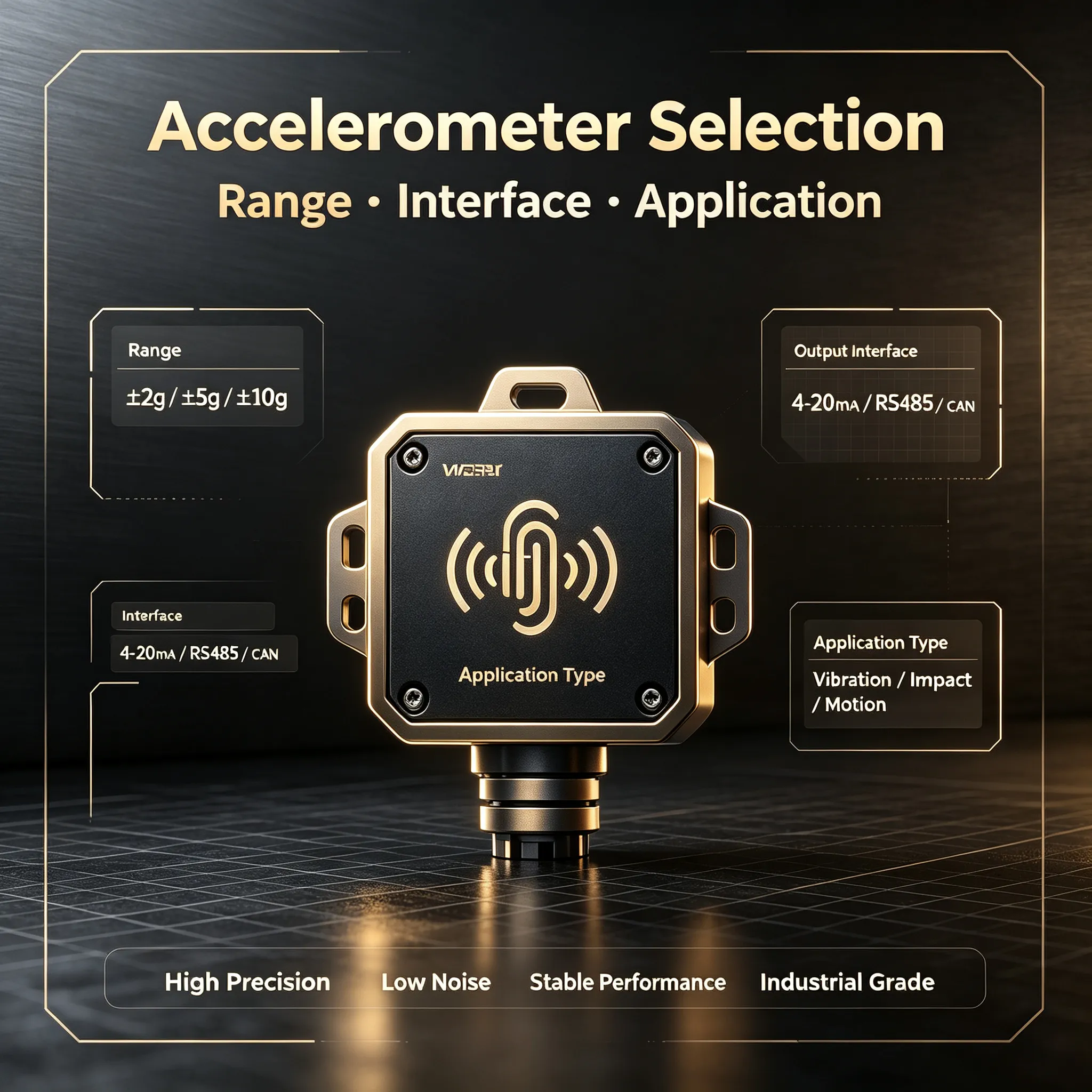
We build industrial accelerometers for exactly this job — 3-axis, CAN output in stock, rated for harsh industrial environments. The range runs from a ±2g accelerometer for slow structural movement and tilt-adjacent work, through the ±8g workhorse for motors and pumps, up to the ±16g band for shock-prone machinery. Each shares one mechanical platform, so a program can standardize on the family and still pick the range that matches each asset.
Frequently asked questions
How big is the predictive maintenance market in 2026? About $15.3 billion by the most conservative recent estimate (The Business Research Company), growing near 29% year over year, with other analysts sizing it above $17 billion.
Is vibration the main monitoring technique? It is the largest condition-monitoring segment, because most failures in rotating equipment announce themselves in the vibration spectrum first.
Do small plants actually benefit? Yes. Cheaper MEMS parts plus subscription analytics have removed the two historical blockers — sensor cost and in-house data science.
When will growth slow? Not soon. The same sources project a 28%+ CAGR through 2030, sustained by IIoT adoption and labor shortages that make automated monitoring attractive.
Get a quote
The market is moving; the cheap part of the curve is now. Tell us your machine types, running speeds and mounting positions and we will recommend a range and an output, then quote it. 📧 sales@drksirsensor.com 💬 WhatsApp: +86-135-1581-0281